Description
About this guide
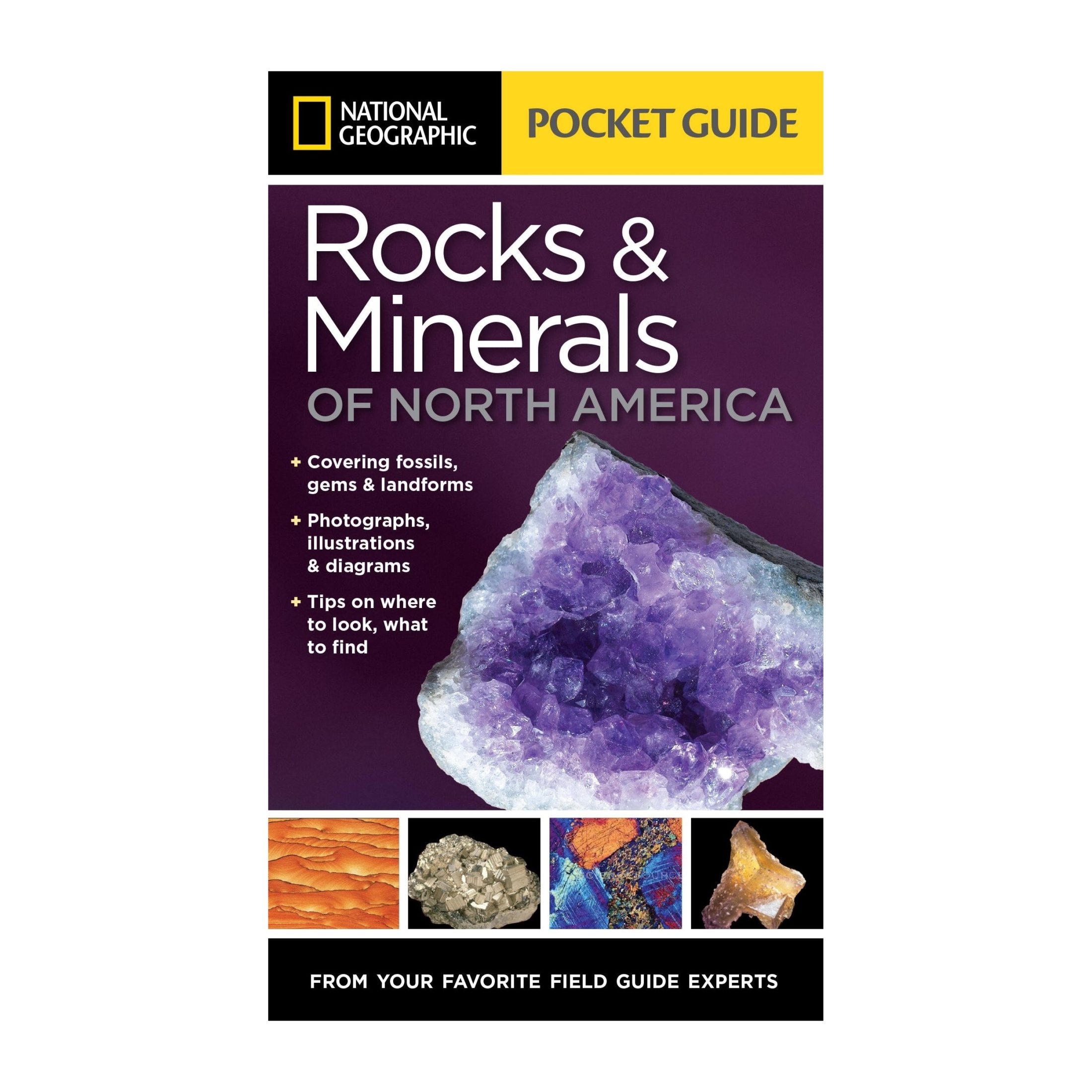
The National Geographic Pocket Guide to Rocks and Minerals of North America is a compact field guide written by Sarah Garlick, a science writer, educator, and founder of GeoReach. Garlick is also the author of Flakes, Jugs, and Splitters: A Rock Climber’s Guide to Geology, which won the 2009 Banff Mountain Book Award. She brings a combination of technical geology background and field experience to the writing. Published in April 2014, this is her most widely distributed work.
The book is part of National Geographic’s Pocket Guide series, which applies the same format across birds, mammals, trees and shrubs, wildflowers, night sky, and this geology title. If you’ve used any of those guides, this one works the same way: organized for quick field reference, sized to fit a jacket pocket or daypack side pouch, and built around photographs and clear identification keys rather than dense technical prose.
For visitors to the Black Hills specifically, this guide covers the geology you’ll actually see. The region’s bedrock is some of the most geologically varied terrain in the Great Plains: Precambrian granite and schist at the core of the dome, limestone in the ring that encircles it, and the Pahasapa Limestone formation that gives rise to Wind Cave and Jewel Cave. Quartz, feldspar, mica, and tourmaline all occur here in the pegmatite veins that cut through the older rocks. This guide covers all of them.
What’s inside
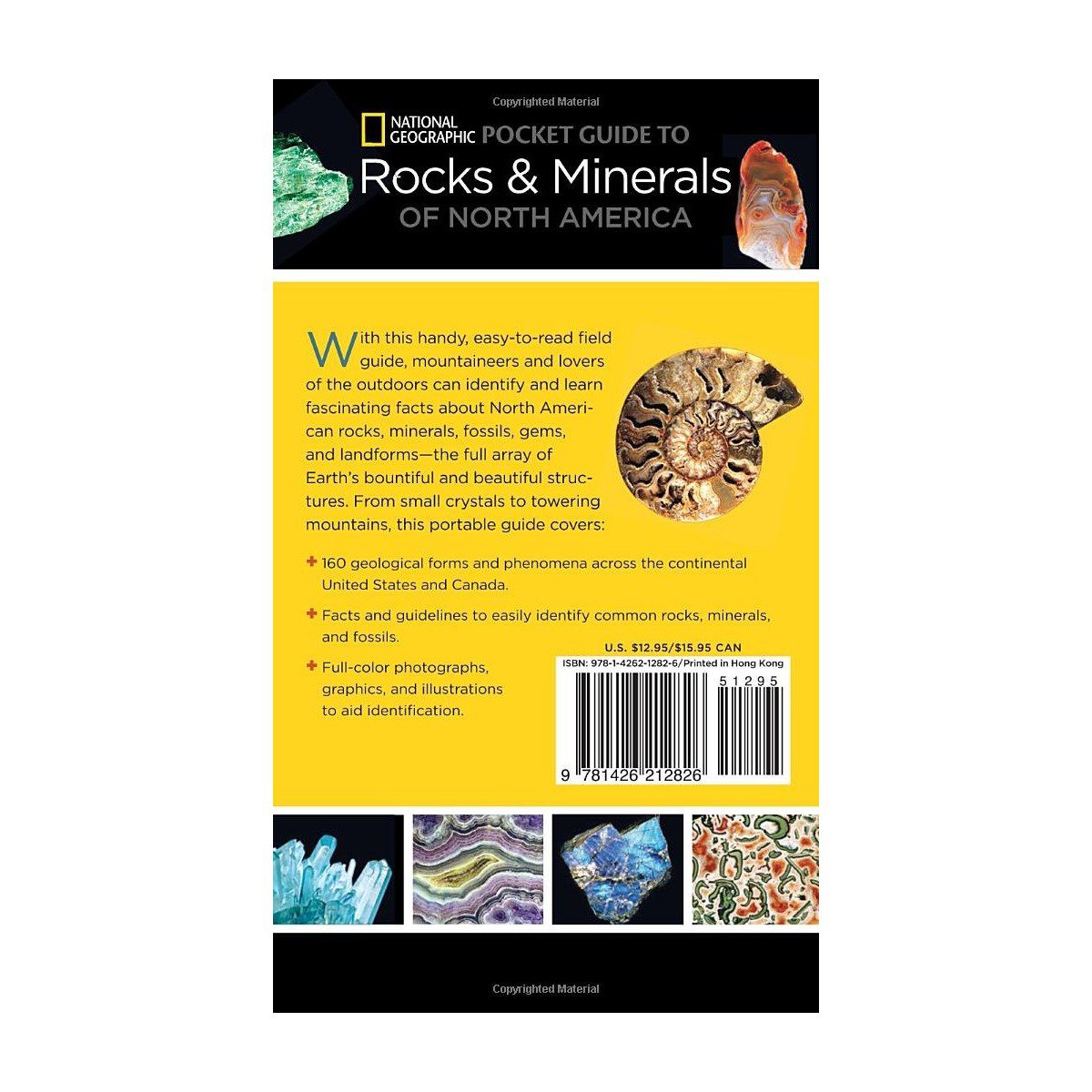
The 184-page guide includes 160 entries organized across four categories:
- 44 rocks (including granite, schist, limestone, sandstone, and others common in the Black Hills)
- 44 minerals (quartz, feldspar, calcite, tourmaline, silver, gold, and more)
- 20 fossils (including the petrified wood, shark teeth, and ancient marine fossils found across the region)
- 52 landforms (arches, cinder cones, caves, and the geological formations visible across the American West)
Each entry includes color photographs, key identification points, and commissioned illustrations by Jared Travnicek, a certified medical illustrator with an M.A. from the Johns Hopkins University School of Medicine. The guide also includes an introduction to geology basics: key properties and classifications used to identify rocks and minerals, and how they formed over time.
Specifications
- Pages: 184
- Dimensions: 4-1/4″ x 7″ x 7/16″
- Weight: 7.5 oz
- Binding: Paperback
- Publisher: National Geographic
- Author: Sarah Garlick
- Illustrator: Jared Travnicek
- ISBN-13: 9781426212826
- Published: April 2014
Who is this for?
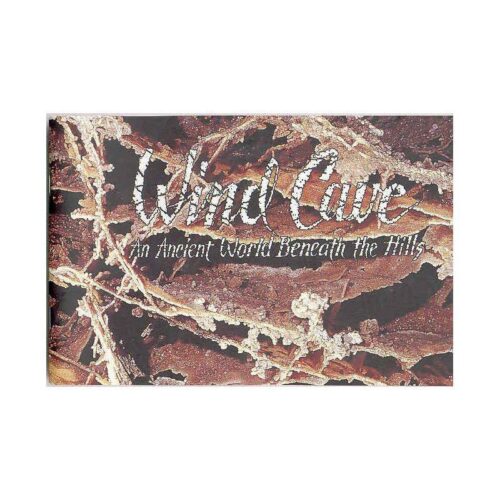
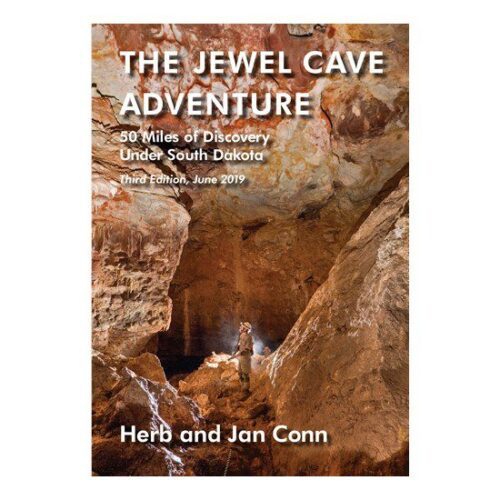
Visitors to Wind Cave National Park or Jewel Cave National Monument who want to understand what they’re walking through. Both caves formed in Pahasapa Limestone, and the guide covers limestone, calcite, and the specific mineral formations that appear in cave environments. Wind Cave’s boxwork is an unusual form of calcite fins; Jewel Cave’s dogtooth spar and nailhead spar crystals are calcite varieties. The guide covers calcite directly. It also covers granite and schist, which you’ll see above ground throughout the Black Hills.
Hikers and outdoor regulars who pick up rocks and want to know what they’re looking at. The Black Hills have granite, schist, quartzite, limestone, and sandstone all within a short drive of each other. Pegmatite veins in the granite core contain some of the largest crystal formations in the region. This guide is sized to go in a daypack and organized for quick look-ups on the trail, not at home on a desk.
Anyone buying a gift for a geology-curious person. At $12.95 it works as a standalone purchase or an add-on. It’s specific enough to feel thoughtful, and the NatGeo Pocket Guide format is well known enough that most people who receive it know what they’re getting.
Frequently asked questions
How many entries does this guide cover?
160 entries total: 44 rocks, 44 minerals, 20 fossils, and 52 landforms. Each has color photographs, key identification points, and a short description of formation and use.
Is this a good guide for beginners with no geology background?
Yes. Garlick wrote it specifically as a beginner’s field guide. The entries use plain language with key facts called out visually, not dense technical paragraphs. The guide includes a basic introduction to geology that covers how to identify rocks and minerals before you get into the individual entries. If you can read a trail sign, you can use this guide.
How does this compare to a Peterson or Audubon rocks and minerals guide?
The Peterson Field Guide to Rocks and Minerals and the Audubon Society guides are more comprehensive and heavier. They cover more species in greater depth, which makes them better suited for serious collectors or students doing systematic work. This NatGeo guide is designed for day use: lighter, faster to flip through, better for identifying something you just picked up on a trail. If you want to build a collection and learn the science systematically, a Peterson guide will serve you better long term. If you want to know what that gray striped rock in your hand is before lunch, this one will answer the question.
Does this guide cover the geology I’ll see at Wind Cave and Jewel Cave?
Yes. Both caves formed in the Pahasapa Limestone, and the guide covers limestone, calcite, and the specific mineral formations that appear in cave environments. Wind Cave’s boxwork is an unusual form of calcite fins; Jewel Cave’s dogtooth spar and nailhead spar crystals are calcite varieties. The guide covers calcite directly. It also covers granite and schist, which you’ll see above ground throughout the Black Hills.
Does it cover fossils found in the Black Hills region?
The 20 fossil entries include types found or commonly associated with the northern Great Plains, including petrified wood and marine fossils from ancient inland seas. The Black Hills region sits within a geologically rich area, and several of the landform entries cover features visible in the surrounding badlands formation and Great Plains. Note that Agate Fossil Beds National Monument in Nebraska, a BHPFA partner site, has significant Miocene-era mammal fossil beds; the fossil entries in this guide cover a range of types that give useful context for understanding that site as well.
Does buying this support the parks?
Yes. BHPFA is the official nonprofit partner of Wind Cave National Park, Jewel Cave National Monument, Scotts Bluff National Monument, and Agate Fossil Beds National Monument, as well as the Black Hills National Forest and Nebraska National Forests and Grasslands. Proceeds from every purchase support education programs, conservation projects, and visitor services at these sites.
Are there other guides in this series at BHPFA?
Yes. BHPFA carries multiple titles in the National Geographic Pocket Guide series. Each follows the same format and dimensions, so they stack and travel together as a set. See the product family section below.
Other National Geographic Pocket Guide titles at BHPFA
- National Geographic Pocket Guide to the Birds of North America
- National Geographic Pocket Guide to the Mammals of North America
- National Geographic Pocket Guide to Trees and Shrubs of North America
- National Geographic Pocket Guide to Wildflowers of North America
- National Geographic Pocket Guide to the Night Sky of North America