National Grasslands Visitor Center • Wall, South Dakota
National Grasslands Visitor Center: explore the Great Plains
Twenty national grasslands stretch across America, and this is the one visitor center that tells the story of them all. It sits on Main Street in Wall, South Dakota, a few minutes off I-90, and it costs nothing to walk in.
The main exhibit room is being renovated. Temporary displays fill the lobby and theater in the meantime, and the Fossil Wall exhibit, the film, the outdoor garden, and the park store are all open. For current status, see fs.usda.gov or call 605-279-2125.
Drive I-90 across western South Dakota and the grass runs to the horizon in every direction. It looks empty at 80 miles an hour. It is anything but. That grass is one of the most productive and most altered ecosystems in North America, and the country set aside twenty national grasslands to keep pieces of it public. The story of those twenty places is told in exactly one visitor center, and you are a freeway exit away from it.
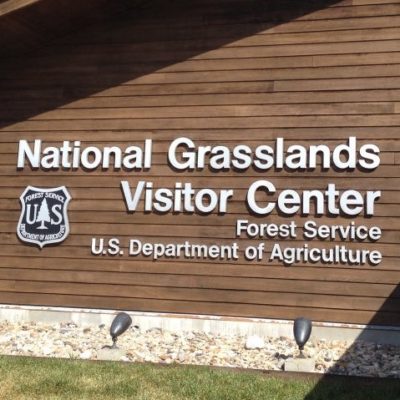
The National Grasslands Visitor Center is small, free, and easy to find: 708 Main Street in Wall, two blocks south of Wall Drug. Give it a half hour and the prairie you drive through the rest of the day stops being scenery and starts being a story about grass, wildlife, ranching, and recovery. We have been the visitor center’s nonprofit partner since 2008, so this page is our local’s guide to what is inside and how to make the stop count.
What is the National Grasslands Visitor Center?
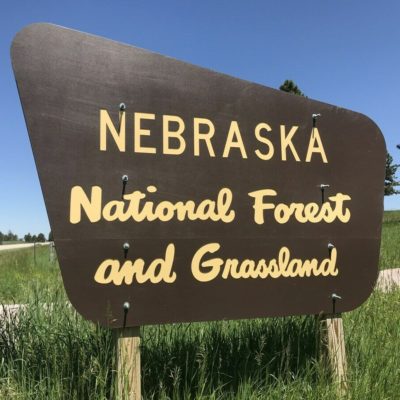
It is the only visitor center for all twenty Forest Service national grasslands. Other public lands get a visitor center apiece. The grasslands, scattered from North Dakota to Texas to Oregon, share this one building in Wall. The USDA Forest Service operates it as part of the Nebraska National Forests and Grasslands, and the building doubles as the Wall Ranger District office, so the people behind the desk manage the real grassland that starts at the edge of town.
Inside, interpretive displays introduce the grasslands that make up the Great Plains: the wildlife and plants, how grazing is managed on public grass, and how the twenty national grasslands and Midewin National Tallgrass Prairie came to be. Kids get hands-on activities and a Junior Ranger program. A short film runs in the theater, and a native plant garden grows outside the door.
What are the national grasslands?
They are one of the great recovery stories on American public land. Most national grasslands began as homestead country that failed in the Dust Bowl years of the 1930s, when drought and plowed-under prairie turned to blowing dust. The federal government bought out ruined farms and spent decades restoring the land. In 1960 the recovered lands were designated national grasslands, and the Forest Service has managed them since.
Today there are twenty, covering roughly 3.8 million acres. Seventeen sit east of the Rockies, spread along the Great Plains from the badlands of North Dakota down to north-central Texas. Three more lie farther west, in Oregon, California, and Idaho. They are working landscapes, open to hiking, camping, hunting, and grazing alike, and far less visited than the national parks they neighbor.
You do not have to imagine any of this from the exhibit hall. Buffalo Gap National Grassland, one of the twenty, surrounds Wall itself. Step out of the visitor center, and the subject matter starts a short drive away.
What will you see inside?
The exhibits work the way good grassland does: quietly, with more going on than first appears. Displays inside and out cover grassland wildlife and plants, grazing management, and the history of the twenty national grasslands and Midewin National Tallgrass Prairie. The newest piece is the Fossil Wall, finished in June 2025, which re-creates the geologic layers of the local badlands formations with replica fossils of the plants and animals that lived here millions of years ago.
The film: Ferret Town
The theater shows Ferret Town, the story of the black-footed ferret, one of the rarest mammals in North America and a grassland conservation flagship. It comes in a 10-minute version if you are stretching your legs and a 28-minute version if you want the whole story. Ask at the desk and they will start it for you.
For kids
Hands-on activities are built into the exhibits, and a Junior Ranger program is available to all visitors. It is an easy win on a road-trip day: the badge takes about as long as the adults want with the displays.
Outside: the Living Landscape garden
A mixed-grass native plant garden with interpretive signs grows outside the building, so you can put names to the grasses and wildflowers you have been driving past. The garden is outdoors and viewable year-round, even when the building is closed.
Every purchase supports this place
Shop the park stores
We run the bookstores inside the visitor centers. Field guides, maps, and gear, with proceeds going back into education, interpretation, and visitor services.
Shop the Parks
Members save 15% on eligible purchases. Join for $30 a year.
Where we work
Explore the places we support
Explore our partner sites in the Black Hills and western Nebraska. Find visitor information and ideas for your trip.
-
 National Park
Wind Cave
Explore a cave below the prairie. Watch for bison above ground.
Plan your visit -
 National Monument
Jewel Cave
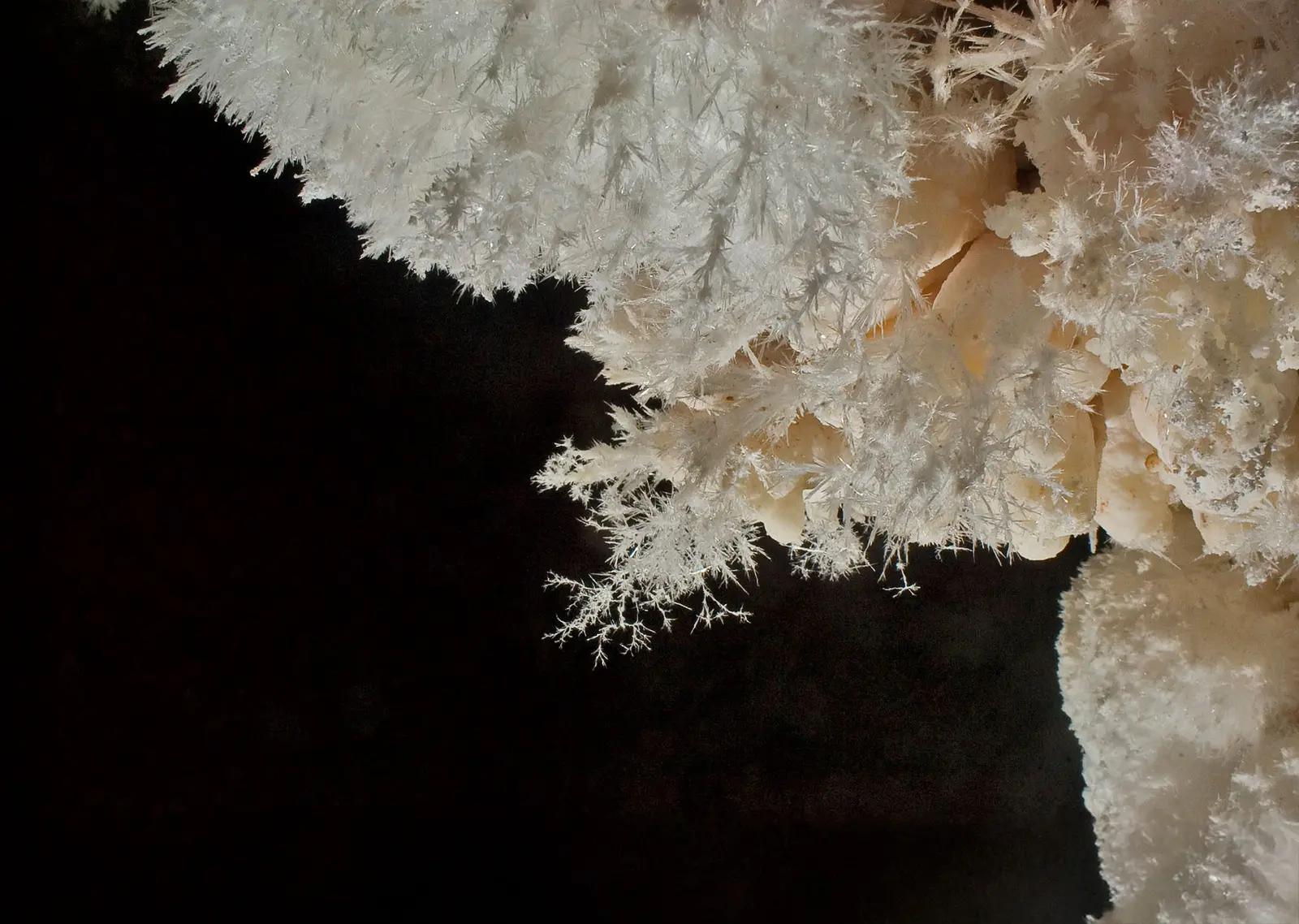
See the cave formations on a ranger-led tour.
Plan your visit -
 National Forest
Black Hills
Explore pine forests, granite peaks, and miles of trails.
Plan your visit -
 National Monument
Scotts Bluff
Follow the Oregon Trail story. Find trails and views over the North Platte Valley.
Plan your visit -
 National Monument
Agate Fossil Beds
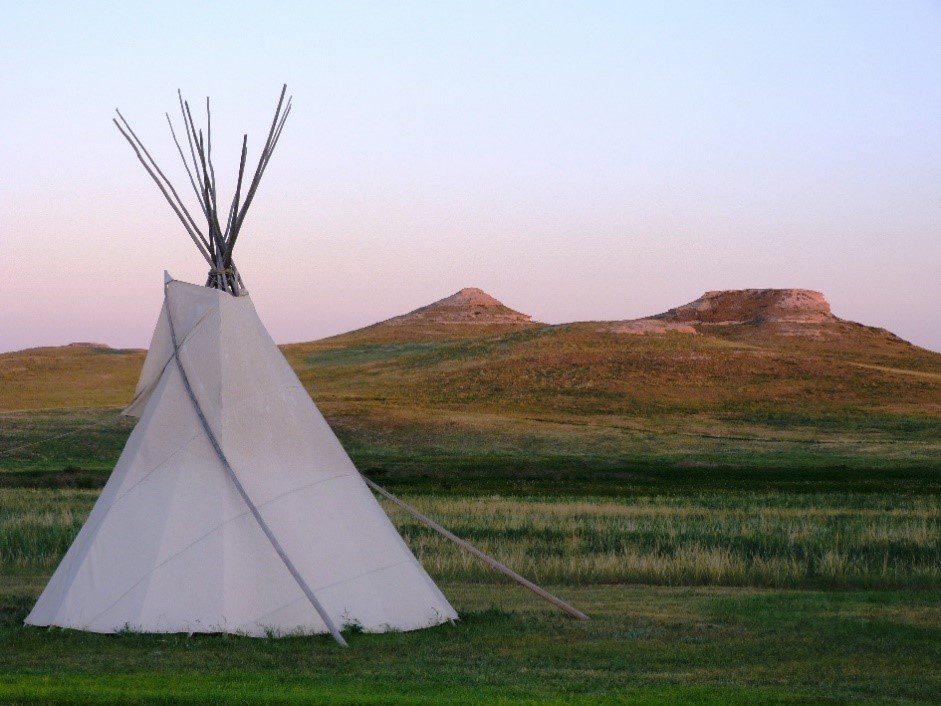
Explore fossil exhibits and walk the monument’s trails.
Plan your visit -
National Forests & Grasslands
Nebraska
Explore forests and open grasslands in Nebraska and South Dakota.
Plan your visit -
Visitor Center
National Grasslands
Start in Wall, South Dakota. Learn about grassland wildlife and history.
Plan your visit