
Grassland Plants of South Dakota & Northern Great Plains
$29.99
Only 2 left in stock
Shipping calculated in cart/checkout: Shipping rates for first items start at $7, calculated based on weight of total order.
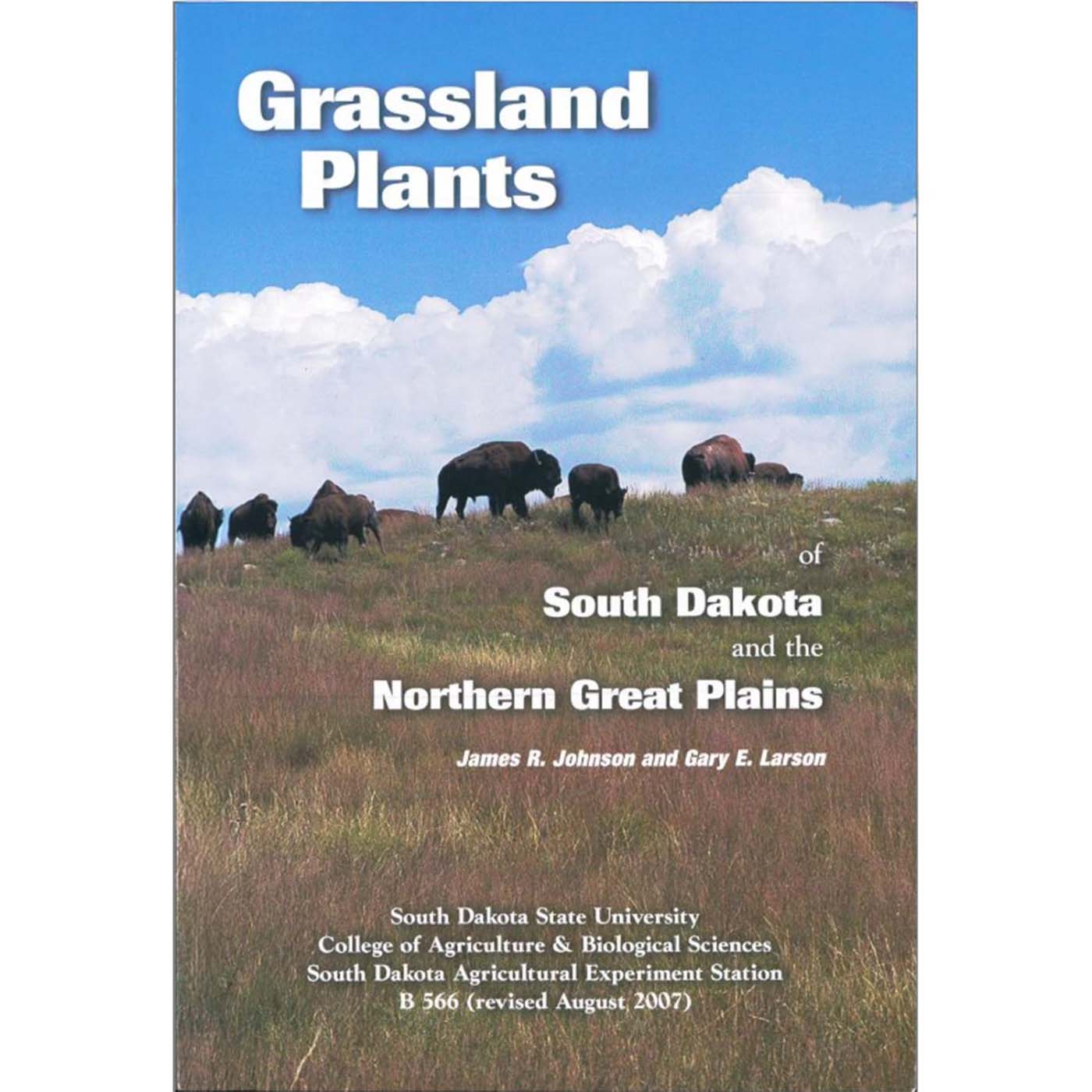
A 288-page color field guide to 292 plant species of the South Dakota and Northern Great Plains grasslands, written by James R. Johnson and Gary E. Larson and published by South Dakota State University. 358 portrait-quality photographs, organized by plant family across grasses, forbs, and woody plants, with notes on habitat, livestock and wildlife value, and traditional Native American uses.
- 288 pages, full-color paperback (6″ x 9″, 17.3 oz)
- 292 species covered: 79 grasses and grass-likes, 181 forbs, 32 native shrubs and trees
- 358 color photographs, one or more per species, plus range and habitat notes
- Authors James R. Johnson and Gary E. Larson (SDSU range and biology faculty), published by South Dakota State University
- Proceeds support the Black Hills National Forest, Nebraska National Forests & Grasslands, and other BHPFA partner parks and forests.
Only 2 left in stock
60-day returns · Ships from South Dakota via USPS
Grassland Plants of South Dakota & Northern Great Plains
$29.99
Only 2 left in stock
Shipping calculated in cart/checkout: Shipping rates for first items start at $7, calculated based on weight of total order.
A 288-page color field guide to 292 plant species of the South Dakota and Northern Great Plains grasslands, written by James R. Johnson and Gary E. Larson and published by South Dakota State University. 358 portrait-quality photographs, organized by plant family across grasses, forbs, and woody plants, with notes on habitat, livestock and wildlife value, and traditional Native American uses.
- 288 pages, full-color paperback (6″ x 9″, 17.3 oz)
- 292 species covered: 79 grasses and grass-likes, 181 forbs, 32 native shrubs and trees
- 358 color photographs, one or more per species, plus range and habitat notes
- Authors James R. Johnson and Gary E. Larson (SDSU range and biology faculty), published by South Dakota State University
- Proceeds support the Black Hills National Forest, Nebraska National Forests & Grasslands, and other BHPFA partner parks and forests.
Only 2 left in stock
60-day returns · Ships from South Dakota via USPS
Real USPS rates, no markup. The money we save funds trail crews and internships.
Join BHPFA for $30 a year -> get your code by email in seconds. -> Use it at checkout today. Show your card at hundreds of nonprofit park stores nationwide for 10% off.
Every item is selected or approved by rangers and staff. Your purchase keeps them on the front lines.
Real USPS rates, no markup. The money we save funds trail crews and internships.
Join BHPFA for $30 a year -> get your code by email in seconds. -> Use it at checkout today. Show your card at hundreds of nonprofit park stores nationwide for 10% off.
Every item is selected or approved by rangers and staff. Your purchase keeps them on the front lines.
Description
What is Grassland Plants of South Dakota and the Northern Great Plains?
Grassland Plants of South Dakota and the Northern Great Plains is a 288-page color field guide to 292 vascular plant species that grow on the mixed-grass and tallgrass prairies of South Dakota and the surrounding Northern Great Plains. Written by James R. Johnson and Gary E. Larson, both long-time South Dakota State University range and biology faculty, it was first issued by SDSU’s College of Agriculture and Biological Sciences in 1999 as a regional bulletin and reissued in 2007 as the trade-paperback edition with an ISBN (9780979718212). It has been in print and reprinted ever since.
The book is organized by plant family, alphabetically within three big groupings: grasses and grass-like plants (79 species), forbs (181 species), and common native shrubs and trees (32 species). Each species entry pairs a portrait-quality color photograph with a short description written, in the authors’ words, “as nontechnical as possible.” Entries cover origin (native vs introduced), distribution and habitat, plus anecdotal notes on livestock forage value, grazing response, wildlife use, and traditional cultural uses, including documented Lakota and other Plains-tribe applications as food and medicine.
What is inside
358 color photographs across 288 pages. Most species get a single full-page or half-page portrait; a few high-variability species get multiple shots. The three sections are weighted roughly the way the prairie itself is: about 80 pages of grasses and grass-likes up front (the structural plants of the grassland), the bulk of the book on forbs (the wildflowers and weeds most visitors notice), and a closing section on the woody plants, mostly the shrubs and small trees of draws, riparian corridors, and the prairie-forest edge.
- Grasses and grass-likes: 79 species, including big bluestem, little bluestem, blue grama, buffalo grass, western wheatgrass, prairie sandreed, needle-and-thread, and the major sedges and rushes
- Forbs: 181 species, from prairie coneflower and purple coneflower to prairie smoke, pasque flower, leadplant, prairie turnip, scarlet globemallow, and the milkweeds, asters, and goldenrods
- Native shrubs and trees: 32 species, including chokecherry, buffaloberry, snowberry, prairie rose, plains cottonwood, bur oak, and ponderosa pine at the woodland edge
Specifications
- Pages: 288
- Dimensions: 6″ x 8 15/16″ x 3/8″ (standard trade paperback, fits a daypack pocket)
- Weight: 17.3 oz
- Binding: Paperback
- Cover and interior: Full-color throughout, 358 color photographs
- Authors: James R. Johnson and Gary E. Larson
- ISBN: 978-0-9797182-1-2
- Publisher: South Dakota State University, College of Agriculture and Biological Sciences
- Year: 2007 (first SDSU bulletin edition 1999; current ISBN edition reprinted regularly)
- Region covered: South Dakota and the Northern Great Plains (eastern Wyoming, eastern Montana, western Nebraska, western North Dakota)
Who is this for?
Visitors to Wind Cave, Custer State Park, the Buffalo Gap National Grassland, and the Nebraska National Forests & Grasslands. If you have ever walked the prairie loop at Wind Cave or driven the Wildlife Loop in Custer State Park and wondered what the silver-leafed shrub or the orange-flowered globemallow at your feet was, this is the book that answers it. The mixed-grass prairie of the southern Black Hills, the Conata Basin, and the Nebraska Sandhills falls squarely inside the region this guide covers.
Ranchers, range managers, and ag producers. The forage-value notes (palatability for cattle and horses, response to grazing, indicator-species cues) and the introduced-vs-native flags are written for working land. Both authors spent careers at SDSU’s department of natural resource management and the biology department, and the book reads like the field guide a county Extension agent would actually use.
Naturalists, students, and amateur botanists. The species coverage is broad enough to be a useful field key (292 species captures most of what you will turn up on a casual walk anywhere in eastern South Dakota or the western Nebraska panhandle), and the writing style is direct enough to use without a botany background. SDSU instructors have used it as a course companion for years.
Native-plant gardeners and ethnobotany readers. The cultural-use notes throughout, food, medicinal, and ceremonial uses documented from Plains-tribe sources, are one of the things that sets this guide apart from a strictly taxonomic key. Pair it with a regional native-plant nursery list and you have a working starter library.
Frequently asked questions
What region does this guide cover?
South Dakota and the Northern Great Plains. In practice that means South Dakota plus the prairie portions of eastern Wyoming, eastern Montana, western Nebraska, and western North Dakota. The authors centered the species selection on the mixed-grass prairie that dominates the region, with coverage of the tallgrass prairie remnants in the eastern part of the range and the shortgrass transition in the west.
How many species are in the book?
292 vascular plant species. The breakdown is 79 grasses and grass-likes (true grasses plus sedges and rushes), 181 forbs (broadleaf herbaceous plants, including all the wildflowers most visitors notice), and 32 common native shrubs and trees of the grassland and grassland-forest edge.
Is every species photographed?
Yes. There are 358 color photographs across the 292 species, so most species get one portrait and some of the more variable or important species get two or three. The photos are full-page or half-page and are described by the authors as “portrait quality,” which they are. This is not a line-drawing key.
Is this a technical botany text or a casual field guide?
It is in between, leaning toward the casual side. Each entry includes the scientific name and family for the people who want them, but the descriptions are written, in the authors’ phrase, “as nontechnical as possible.” A reader with no formal botany background can identify most species in this book using the photo plus the description. A range-management student can use it as a working field reference.
Who wrote it?
James R. Johnson and Gary E. Larson, both at South Dakota State University. Johnson is a long-time range-management researcher in the Department of Natural Resource Management. Larson is a botanist in the Department of Biology and Microbiology and a co-author of several other regional plant references for the Northern Great Plains. The book grew out of decades of fieldwork and was first published as an SDSU Agricultural Experiment Station bulletin in 1999.
Is this the same as the older SDSU bulletin?
Yes, in content. The 1999 SDSU bulletin (Open PRAIRIE bulletin 764) is the original; the 2007 ISBN-bearing trade edition (9780979718212) is the same content reissued for retail distribution. Reprintings have continued, including a 2023 reprint. If you have an older SDSU bulletin copy, the species coverage is essentially the same.
How does this compare to a Peterson or Audubon field guide?
National field guides like Peterson and Audubon are excellent for the country as a whole but cover the Northern Great Plains thinly because they have the entire continent to cover. This book is the regional specialist: 292 species selected because they actually grow on the South Dakota and surrounding prairies, with notes specific to this region’s soils, grazing pressure, and cultural history. For a Black Hills or western Nebraska trip, this is the more useful pack-along.
Will it fit in a daypack?
Yes. 6″ x 9″, just under 3/8″ thick, a hair over a pound. It is the size of a standard trade paperback and slips into a daypack pocket or a glove box without complaint.
Does buying this support national parks?
Yes. BHPFA is the official nonprofit partner of Wind Cave National Park, Jewel Cave National Monument, Scotts Bluff National Monument, and Agate Fossil Beds National Monument, as well as the Black Hills National Forest and Nebraska National Forests & Grasslands. Proceeds from every purchase support education programs, conservation projects, and visitor services at these sites.
Can I get this at a BHPFA park visitor center?
Usually, yes. We stock this guide at our Black Hills and Nebraska partner-site stores. Call ahead if you want to confirm a specific location’s current inventory, or order it here and we will ship it.
Every Purchase Makes a Difference
When you shop with Black Hills Parks & Forests Association, you are directly funding:
- Education programs — nature workshops, Junior Ranger activities, and homeschool adventures for kids across the Black Hills
- Trail maintenance — keeping hiking trails safe and accessible at Wind Cave, Jewel Cave, and the Black Hills National Forest
- Visitor services — park store operations, interpretive programs, and the staff who help millions of visitors each year
- Conservation — supporting the long-term health of public lands in the Black Hills and Nebraska
BHPFA is the official nonprofit partner of the National Park Service and U.S. Forest Service in the Black Hills region. We have supported these public lands since 1946.
Additional information
| Weight | 17.3 oz |
|---|---|
| Brand | South Dakota State University |
| Pages | 288 |
| Binding | Paperback |
| ISBN | 9780979718212 |
| Publisher / Manufacturer | South Dakota State University, College of Agriculture and Biological Sciences |
| Year Published | 2007 |
| Dimensions | 6" x 8 15/16" x 3/8" |
| Weight | 17.3 oz |
| Material | Full-color softcover |
Note on International Orders
Some countries charge import duties, VAT, or handling fees on delivery. These are set by your local government and are not included in our checkout total. Customers are responsible for paying any such charges before receiving their package.