Description
About this guide
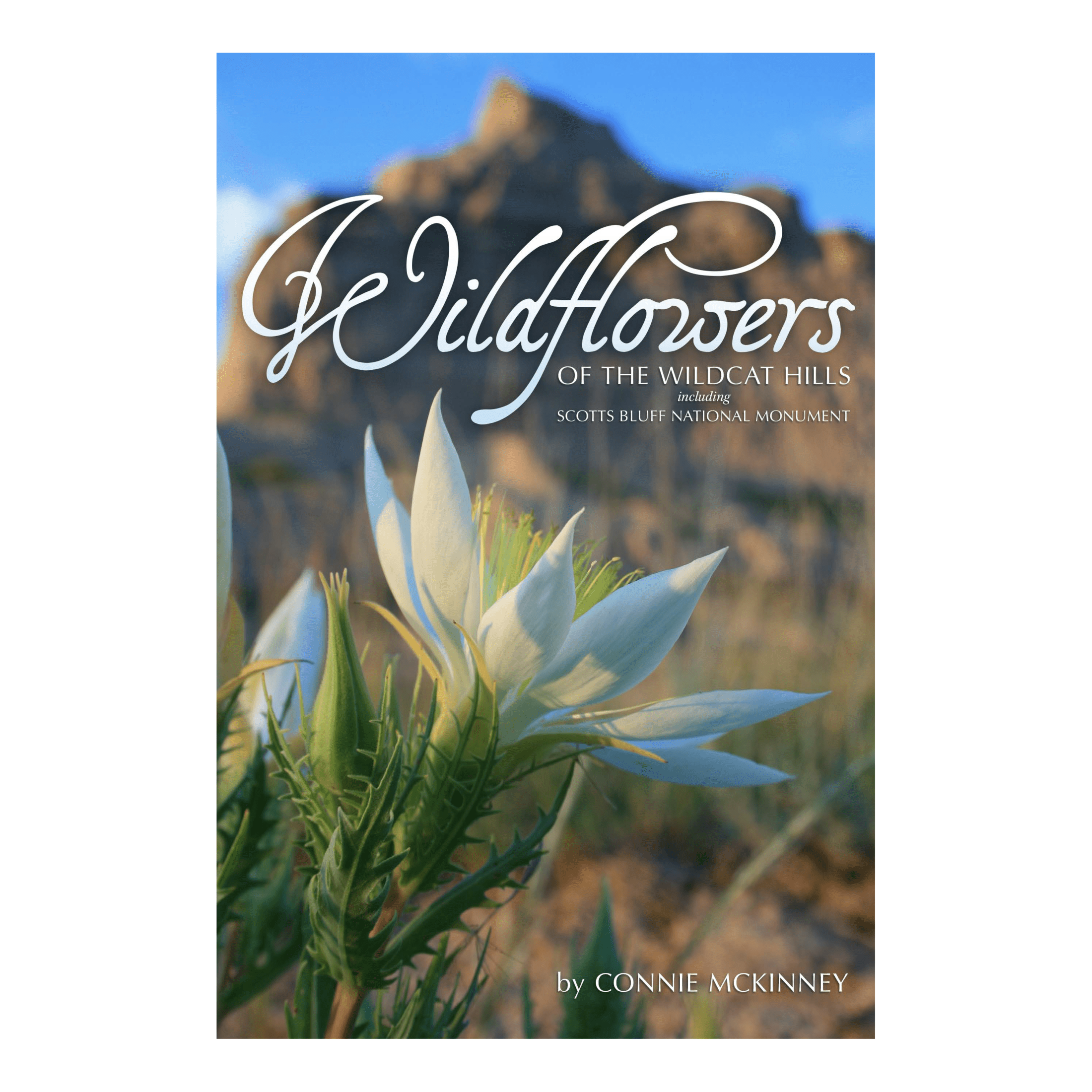
Wildflowers of the Wildcat Hills Including Scotts Bluff National Monument is a regional field guide written and published by Connie McKinney in 2021 (ISBN 9780578852454). It covers the wildflowers of the Wildcat Hills, a rocky escarpment that rises several hundred feet along the south side of the North Platte River through Scotts Bluff, Banner, and Morrill counties in western Nebraska. The Wildcat Hills are composed of sandstone, siltstone, and volcanic ash, and the area is one of the few places in the central plains where prairie species and mountain species grow side by side. Scotts Bluff National Monument sits inside this larger area.
The guide is built for use, not for keying out. Entries are organized first by flower color, then within each color section by bloom season (earliest blooms first). If a flower is in front of you and you can see what color it is, you can find it. The author keeps technical botanical terminology to a minimum and notes a list of references at the back for anyone who wants to go deeper. Common names follow The Flora of Nebraska, with regional Wildcat Hills names noted where they differ. Genus and species names follow the USDA Plants Database.
What’s inside
- Over 400 native plant species documented across the Wildcat Hills region
- Color-first organization (white, yellow, pink, red, blue, etc.) with bloom-season ordering inside each color
- Field photographs of plants in their natural habitat
- Common names, scientific names, and brief identification notes per species
- Reference list at the back for readers who want to move from this guide into more technical botanical sources
- Coverage of the full habitat range of the Wildcats: mixed-grass prairie, badlands, ponderosa pine woodlands, sandsage prairie, grass-covered sand dunes, rock outcrops, and the canyon mosaic
The Wildcat Hills
The Wildcat Hills are unusual. The vegetation is, in McKinney’s words, nearly unchanged from what immigrants on the Oregon Trail saw 150 years ago. The canyons support eastern red cedar, Rocky Mountain juniper, and Nebraska’s largest stands of mountain mahogany. The north-facing slopes hold ponderosa pine woodlands. Mixed-grass prairie, badlands, sand dunes, rock outcrops, and patches of sandsage prairie fill in the rest. Bighorn sheep, swift fox, burrowing owl, leopard lily, and Nuttall’s desert parsley are among the at-risk species that live here. Scotts Bluff National Monument sits within this larger ecological mosaic, and the monument’s own plant inventory documents 452 species, subspecies, and varieties of vascular plants across mixed-grass prairie, ponderosa-juniper woodland, and the North Platte River floodplain.
Where to use this guide
The book is written for the full Wildcat Hills wildlands network, which the author lists as Scotts Bluff National Monument, Wildcat Hills State Recreation Area, Wildcat Hills Wildlife Management Area, Montz Point WMA, Buffalo Creek WMA, Cedar Canyon WMA, and Platte River Basin Environments’ Bead Mountain, Carter Canyon, and Montz Point Ranches. All of these sites are open to public wildflower viewing under the relevant land manager’s rules. Plant collection is prohibited across the wildlands network. Leave the wildflowers where they grow.
Specifications
- ISBN-13: 9780578852454
- Author: Connie McKinney
- Publisher: Connie McKinney (self-published)
- Published: February 2021
- Binding: Paperback
- Dimensions: Approximately 6″ x 9″ x 3/16″
Who is this for?
Hikers and visitors at Scotts Bluff National Monument who want to put a name to what is blooming on the Saddle Rock Trail or along the North Overlook walk. The monument’s mixed-grass prairie and bluff slopes hold a lot of what this book covers, and the color-first organization means you do not need to know the difference between an Asteraceae and a Brassicaceae to use it.
Travelers driving the western Nebraska panhandle, the Pine Ridge, or the broader North Platte River corridor who want a single regional reference instead of a continental field guide that covers everything from Florida to Alaska. A regional book gives you better coverage of the species you are actually going to see.
Local residents, master naturalists, and Game and Parks volunteers in Nebraska who want a current Wildcat Hills reference. The book is written from inside the region rather than from a national publisher’s desk.
Gift buyers looking for a Scotts Bluff or western Nebraska keepsake under $15 that is more useful than a fridge magnet. This is the kind of book a recipient actually puts in the glovebox or daypack.
Frequently asked questions
How many species does this guide cover?
The author writes that the Wildcat Hills are home to over 400 species of native plants. The guide is built around that regional flora. Scotts Bluff National Monument’s own plant inventory documents 452 species, subspecies, and varieties of vascular plants across the prairie, woodland, and river floodplain habitats inside the monument, and most of those occur in the broader Wildcat Hills area this guide covers.
Is this a guide for a beginner, or for someone who already knows their botany?
Beginner-friendly. The author explicitly limits technical botanical terminology and organizes the book by flower color first so that anyone who can see a yellow flower can find it in the yellow section. There is a reference list at the back for readers who want to move into more technical “keying out” work using sources like Flora of the Great Plains.
Will this guide work at Scotts Bluff National Monument specifically, or is it broader than that?
Both. Scotts Bluff National Monument sits inside the Wildcat Hills region this book covers, so the species inside the monument are the same species the book documents. The book’s geographic range is broader (the full Wildcat Hills escarpment along the North Platte through Scotts Bluff, Banner, and Morrill counties), so it also covers ground at Wildcat Hills State Recreation Area, the surrounding Nebraska Game and Parks WMAs, and Platte River Basin Environments preserves.
How is the book organized?
By color first, then by bloom season inside each color. White flowers in one section ordered earliest-blooming to latest, then yellow flowers ordered the same way, and so on. The author notes that many flowers show a wide range of color variation, so if a plant is not where you expect it, check the next-most-similar color section.
What sources does the author use for plant names?
Scientific (genus and species) names follow the USDA Plants Database. Common names follow The Flora of Nebraska, with regional Wildcat Hills common names noted where the local usage differs from the Flora.
Does this cover Scotts Bluff’s bighorn sheep or other wildlife?
This is a wildflower book, not a general natural history. Wildlife is mentioned in context (the author notes that bighorn sheep, swift fox, burrowing owl, and leopard lily are among the at-risk species in the Wildcat Hills), but the entries are wildflowers.
Where can I use this guide?
Scotts Bluff National Monument, Wildcat Hills State Recreation Area, Wildcat Hills Wildlife Management Area, Montz Point WMA, Buffalo Creek WMA, Cedar Canyon WMA, and the Platte River Basin Environments preserves at Bead Mountain, Carter Canyon, and Montz Point Ranches. The author asks visitors to leave wildflowers in place; collection is prohibited across the Wildcat Hills wildlands network.
Does buying this book support Scotts Bluff National Monument?
Yes. BHPFA is the official nonprofit partner of Wind Cave National Park, Jewel Cave National Monument, Scotts Bluff National Monument, and Agate Fossil Beds National Monument, as well as the Black Hills National Forest and Nebraska National Forests & Grasslands. Proceeds from every purchase support education programs, conservation projects, and visitor services at these sites.