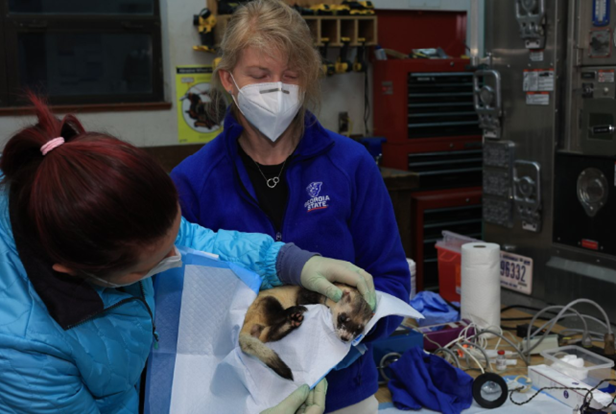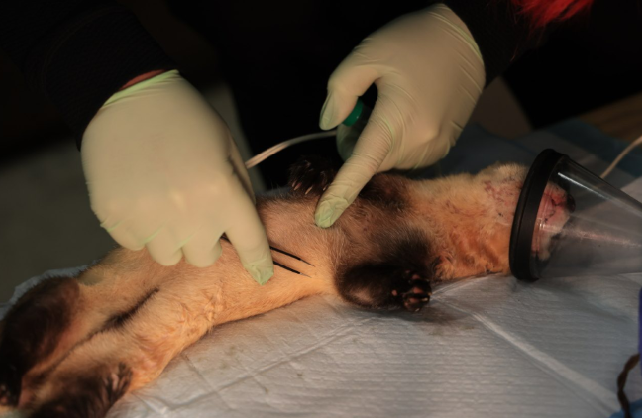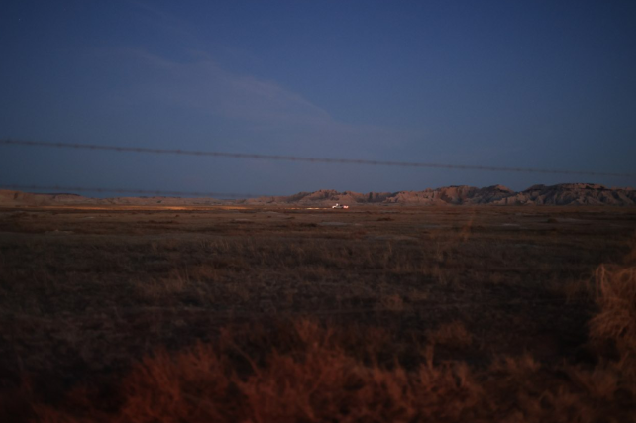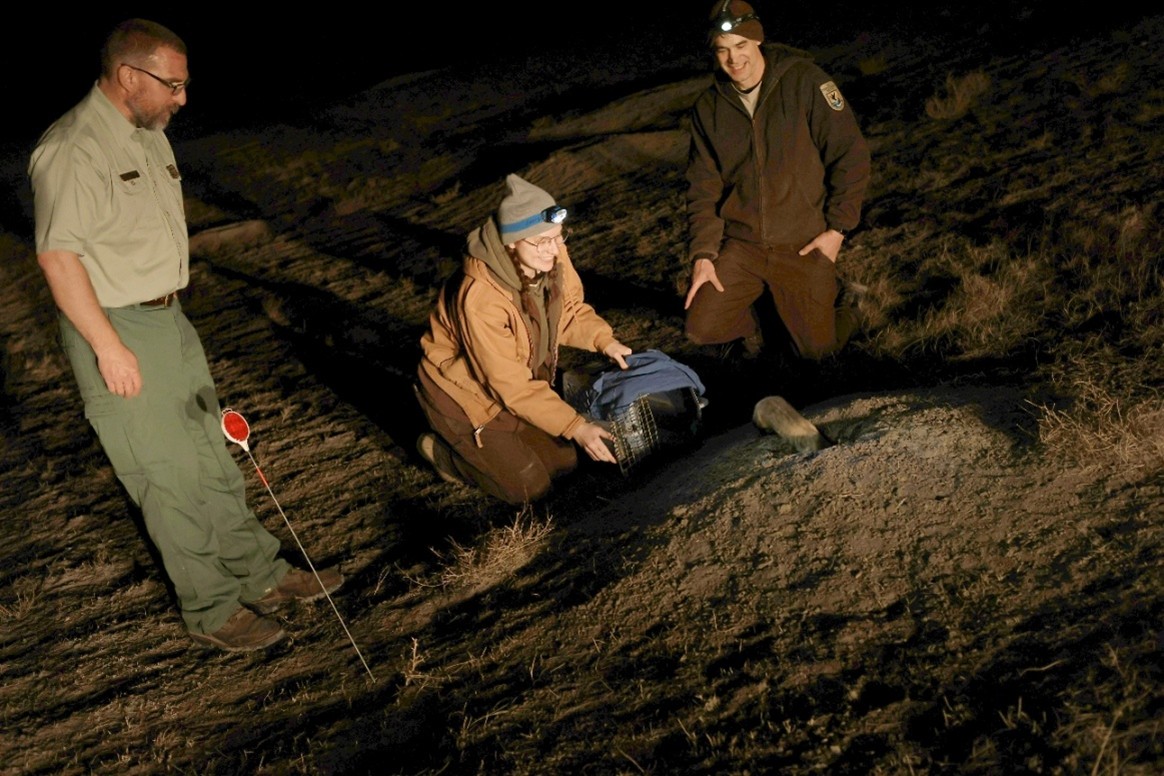
In the early morning hours of March 20, 2026, biologists sweep the Conata Basin of Buffalo Gap National Grassland with spotlights, watching for the emerald eye‑flash that signals a black-footed ferret.
Long after the sun slips behind the buttes, narrow beams of light sweep the grasslands—spotlights mounted to pickup trucks, searching for the emerald eyeshine of one of America’s rarest mammals. The mission is part science and part stewardship, carried out under a sky filled with constellations and the quiet of an early spring prairie. The team is here to survey black-footed ferrets: briefly capture them, and collect species-saving samples before returning them safely to the burrows they borrow from prairie dogs.
Once presumed extinct in 1979, black-footed ferrets were rediscovered in 1981 near Meeteetse, Wyoming, after a ranch dog named Shep tangled with what turned out to be a ferret in the Hogg family’s yard. Biologists feared the population was a lost cause—decimated by canine distemper and sylvatic plague—prompting a last-ditch decision to bring the remaining individuals into captivity. Every wild black-footed ferret alive today traces its lineage to those 18 survivors.
By the late 1980s, the Conata Basin of Buffalo Gap National Grassland and the Badlands National Park landscape in South Dakota had emerged as a top reintroduction candidate. After a full environmental analysis and extensive public engagement—sometimes contentious over fears of land use restrictions—ferrets were released into Badlands National Park in 1994–95 and onto Buffalo Gap National Grassland in 1996. As veteran biologist Travis Livieri put it with a smile: “We put ferrets in the park. The world didn’t end.”
If anything, a blueprint for endangered species recovery began.
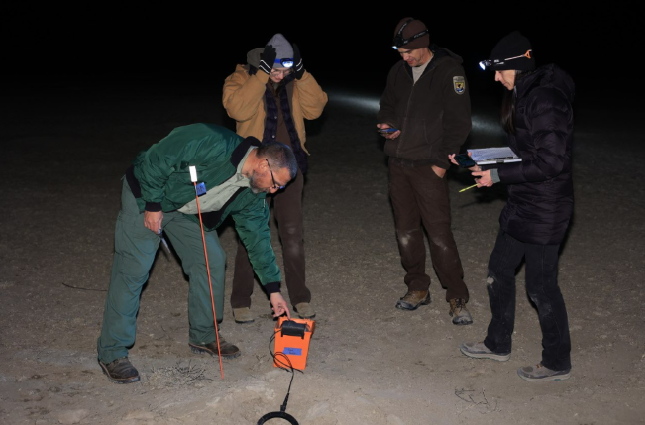
From left, Phil Dobesh, wildlife program manager for Nebraska National Forests and Grasslands, explains a ring reader, a device that logs microchipped ferrets as they pass through burrow entrances. Standing beside him are Laura Connelly of South Dakota Game, Fish and Parks; Matt Swarz of the U.S. Fish and Wildlife Service, checking the device’s data on his phone; and Jessica Speiser of South Dakota Game, Fish and Parks, recording the readings.
At the Nebraska National Forests & Grasslands, Wildlife Program Manager Phil Dobesh holds a long-term role in this work that has demanded steady hands and steady partnerships.
“We do our best to balance the needs of this species in the safe haven it has here and the needs of our neighbors,” Dobesh said. “We coordinate monitoring and active plague management for Conata Basin’s black-footed ferrets, and we conduct prairie dog control efforts on Buffalo Gap National Grassland to be good neighbors to adjacent landowners. Contractors may treat an area, but we are responsible for the results of that work.”
That balance—habitat conservation in service of biodiversity and working lands—is where the land management’s mission lives.