
Help keep programs like this going
Black Hills Parks and Forests Association funds the artist residencies, seminars, and education at Agate Fossil Beds and Jewel Cave. Memberships and park-store purchases are what make that support possible.
The 2024 artists in residence at Agate Fossil Beds and Jewel Cave National Monuments
For a few weeks each year, a working artist moves into the quiet country around Agate Fossil Beds National Monument or Jewel Cave National Monument, hikes the trails, sits with the fossils and the cave, and makes new work in response. This is the National Park Service Artist in Residence program, and Black Hills Parks and Forests Association helps pay for it at both monuments.
Art has long been part of how people connect with public land. The Artist in Residence program, often shortened to AiR, keeps that older idea going in a simple way: give an artist time, access, and quiet, and let the place shape the work. In 2024, three artists took part across the two monuments, and their photographs, mixed-media pieces, and designs are now something visitors can see for themselves.
This guide covers what the residency is, how artists spend their time here, how the finished work reaches visitors, how to apply, and where BHPFA fits in. It stays with these two monuments and the program that connects them.
The National Park Service Artist in Residence program places a working artist at a park unit for a set stretch of time, usually one to a few weeks. The artist stays near or on site, spends the days out in the place, and works in whatever medium is theirs: photography, painting, drawing, mixed media, writing, music. In exchange for the time and access, artists are generally asked to donate a piece from the residency and to share their work with the public in some form.
At Agate Fossil Beds and Jewel Cave, that same idea plays out in two very different settings. Agate is open grassland, rare wetlands along the Niobrara River, fossil hills more than 20 million years old, and the Cook Collection of Lakota artifacts in the visitor center. Jewel Cave is one of the longest caves in the world, a dark and quiet world underground, with the forested hills of the southern Black Hills above it. An artist’s response to one place looks nothing like a response to the other, which is part of the point.
The residencies here have run in different seasons. One 2024 artist worked at Agate in the cold of February, another spent two weeks there through changing weather, and the Jewel Cave artist came in June and kept working into July. The season an artist draws is part of what they end up making.
Agate welcomed two artists in 2024, a photographer and a mixed-media artist, each drawn to a different part of the monument.
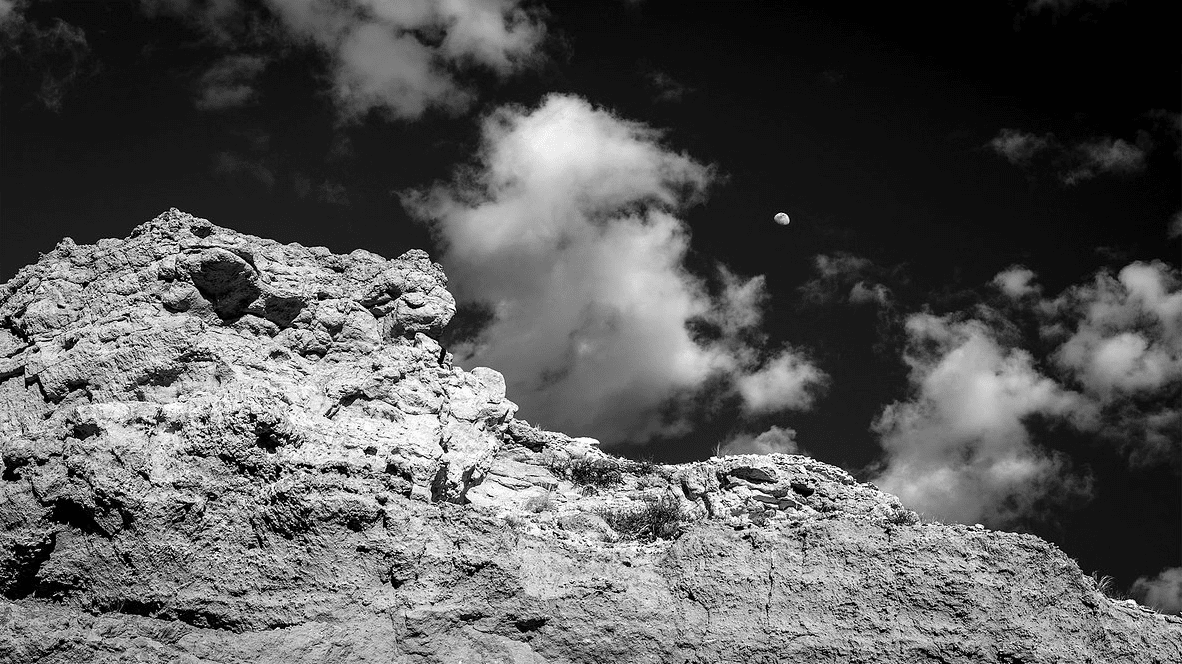
John Emery is a large-format photographer. He spent two weeks at Agate working with both modern and antique glass plate cameras, a slow and deliberate process that suits a place most drivers pass without stopping. He photographed in black and white, through calm sunny days and sudden snowstorms, from the calls of coyotes at dawn to night skies with no city glow in them. His time at the monument was, in his words, a deeply emotional stretch of work.
“Grasslands and the plains don’t receive the attention or respect they deserve. While there may not be dramatic mountains, canyons, or spectacular waterfalls, the plains have an aura about them that is harder to describe.” John Emery, 2024 artist in residence, Agate Fossil Beds

Magan Ruthke, a mixed-media artist from Baltimore, worked at Agate in February. She was drawn to the open grasslands and to the cultural history held in the monument, in particular the patterns and colors of the Lakota art in the Cook Collection. Her own work is not of Lakota origin, and she was careful about that. She took the influences she encountered and set them alongside the wide prairie views rather than claiming them as her own.
“I’ve hiked the hills, driven the long straight roads through pasture and prairie, tromped through wetlands, visited small towns, viewed insane dark sky, and made progress on work for back home. I’m so grateful for our National Parks and their staff for making programs like the AiR possible.” Magan Ruthke, 2024 artist in residence, Agate Fossil Beds
Both artists were working from the same ground a visitor can walk today. The fossils, the wetlands, and the Cook Collection are all part of the monument’s own story, told in full on the Agate Fossil Beds National Monument guide.

In 2024, Jewel Cave National Monument hosted its first artist in residence, Audrey Merwin. She spent a week at the cave in June to take in the place and its resources, then kept working on her projects through July. Her strength was an eye for detail and a steady, welcoming way of working.
Rather than a single framed piece, Audrey made graphic designs and iconography for the park to use, art meant to be handled and worn. She created a bandana and magnets as volunteer appreciation items, and her work premiered at the Volunteer Appreciation event at the cave on September 28. Her designs will keep turning up on the gear park volunteers use, which means her residency reaches visitors indirectly, through the people who help run the monument.
You can read more about the cave itself, its tours, and how to plan a visit on the Jewel Cave National Monument guide.
An artist’s days here are spent much the way a curious visitor’s would be, only slower and with a sketchbook or camera along. A residency at these two monuments usually means some mix of the following.
The fossil hills and prairie at Agate, including the Daemonelix and Fossil Hills trails, covered at whatever pace the work needs.
Rare wet meadows along the Niobrara River, a green seam running through open grassland.
Time with the Lakota artifacts in the Agate visitor center, engaged with respect and care.
Guided time inside one of the longest caves in the world, and the forested hills above it.
Some of the darkest night skies around, over both monuments, well away from city light.
Long, quiet stretches to photograph, draw, or build, and then finish pieces back home.
The residencies are run by the monuments and the National Park Service, not by BHPFA, so the call for artists and the terms come from the park. Details change from year to year, so the most reliable step is to check the National Park Service page for each monument or contact the monument directly.
In general, an NPS Artist in Residence application asks for samples of your recent work, a short artist statement, and a proposal for what you would do during the residency and what you would leave behind. Selected artists are usually asked to donate a piece created during their stay and to share their work with the public, through a program, a display, or, as with the Jewel Cave designs, art the park can put to use. Media are open: photographers, painters, writers, and mixed-media artists have all taken part.
Recent pieces that show your medium, plus a short note on how you work and why this place.
What you would make, and a season that fits both your work and the park’s calendar.
A finished work from the residency, and a way to share it with visitors.
If you are thinking about applying, spend time with the monument pages first, both the Agate Fossil Beds and Jewel Cave guides. Knowing the place is half of a good proposal.
A residency gives the artist a rare stretch of time and quiet. It gives the rest of us the work that comes out of it.
John Emery and Magan Ruthke both donated works made during their residencies to Agate Fossil Beds, where they are on display for visitors. Audrey Merwin’s designs live on the bandana, magnets, and other gear that Jewel Cave volunteers use, so her work will be in front of visitors for years, carried by the people who staff the trails and tours. Some of the 2024 residency work was also written up in the Fall 2024 edition of Wonder and Exploration Quarterly, the BHPFA publication.
Art like this does quiet work. It gives people another way into a fossil bed or a cave, and it can turn a passing interest into the kind of care that keeps these places protected.
It is worth being plain about our part. Black Hills Parks and Forests Association is the nonprofit cooperating association for Agate Fossil Beds and Jewel Cave, along with Wind Cave and Scotts Bluff. We do not run the Artist in Residence program, and we do not manage either monument. The National Park Service does.
What we do is help pay for it. BHPFA provides funding for the residencies and the related artist seminars at both monuments, which helps cover the resources an artist needs to take part and to share the finished work with the public. That money comes from park-store sales, memberships, and donations, so a purchase at an Agate or Jewel Cave bookstore, or a membership, helps keep programs like this one running.
A BHPFA membership helps fund the artist residencies, seminars, and education at Agate Fossil Beds, Jewel Cave, and the other BHPFA partner sites.
Fossil hills more than 20 million years old, prairie and wetlands, and the Cook Collection of Lakota artifacts.
One of the longest caves in the world, deep under the forested hills of the southern Black Hills.
Books, maps, and gifts whose proceeds help fund programs like the artist residencies.
Black Hills Parks and Forests Association funds the artist residencies, seminars, and education at Agate Fossil Beds and Jewel Cave. Memberships and park-store purchases are what make that support possible.